Three workshops in Skopje, Bitola, and Tetovo: “The Way Out” – Prevention of Violence and Trafficking of Women and Girls
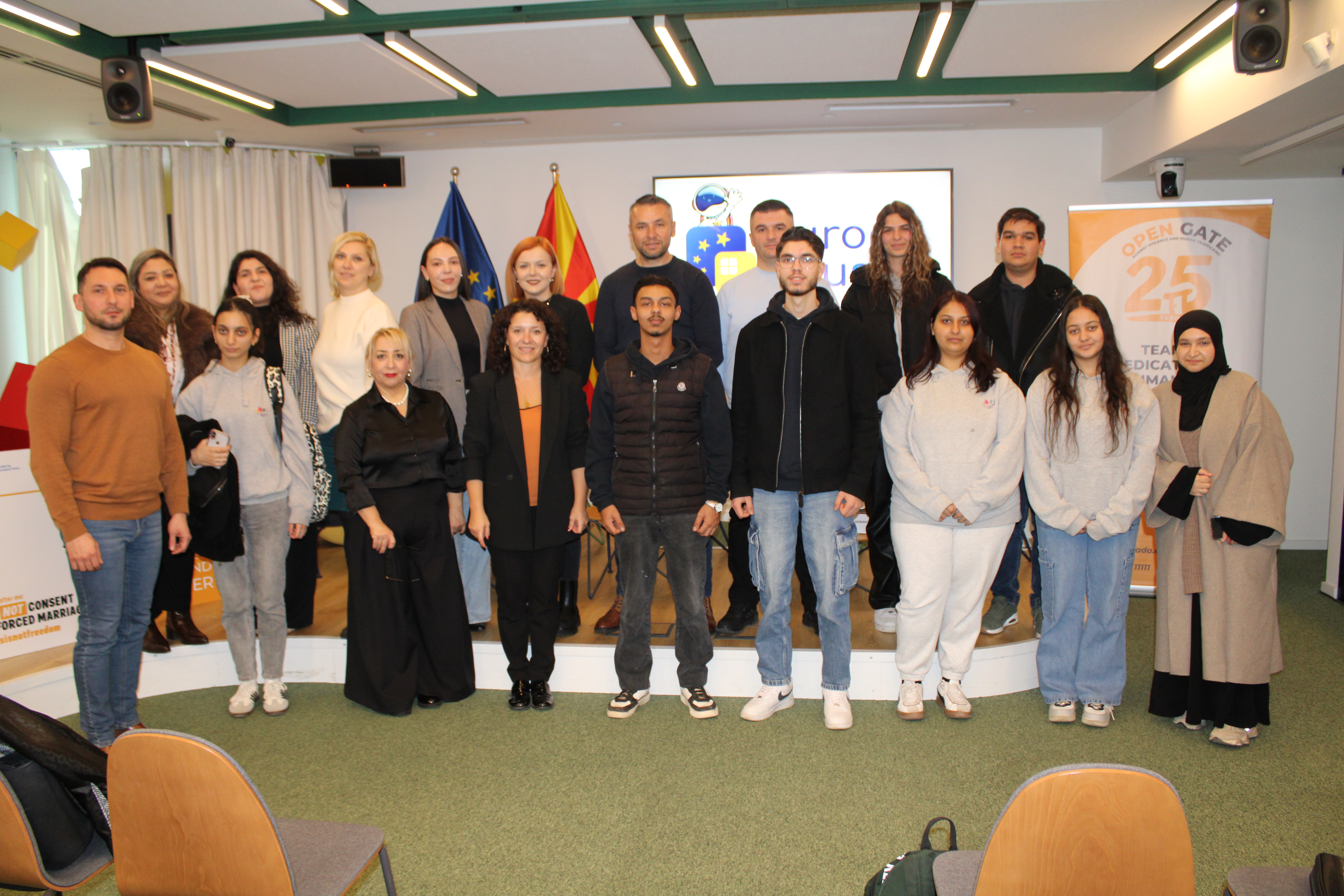
As part of the “16 Days of Activism Against Gender-Based Violence” campaign, Open Gate La Strada, with the support of the Delegation of the European Union to North Macedonia, organized three public events titled “The Way Out: Prevention of Violence and Trafficking of Women and Girls.” The events took place at Europe House in Skopje (2 December), Bitola (3 December) and Tetovo (5 December 2025).
Through the screening of the documentary film “The Way Out” and panel discussions with representatives of institutions, civil society organizations, and young people, the participants—students from secondary schools—learned about the links between gender-based violence, human trafficking, and forced and child marriages, as well as the mechanisms for prevention and protection. Additionally, a short film produced within the “16 Days of Activism Against Gender-Based Violence” campaign was screened.
The events began with welcome addresses from the organizers and the EU Delegation, followed by the screening of the documentary “The Way Out.” Maria Todorovska, Program Director of Open Gate La Strada, and Irena Ivanova from the EU Delegation greeted the participants and especially thanked the secondary school students for attending. They emphasized that “young people are the ones who can improve the situation, bring new freshness and courage, and contribute to gender equality, as well as to the prevention of violence and human trafficking by focusing on economic empowerment and education.”
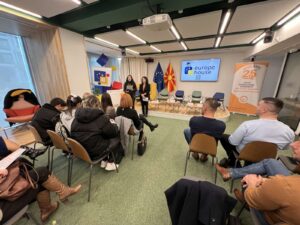
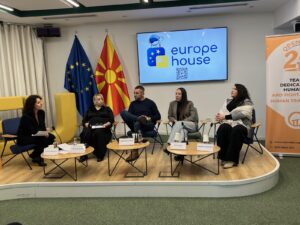
The workshops brought many important messages for all participants. Ivana Kekeva from Open Gate La Strada emphasized that the film “The Way Out” presents the harsh but real picture of violence and exploitation: “These are three real stories that reflect the reality of women and girls in our society, but also their strength to fight and rebuild their lives.” She presented the available reporting mechanisms, noting that the free hotline 0800 11111 offers anonymity, confidentiality, and 24-hour support. Citizens can also report via WhatsApp/Viber, and the Open Gate team provides health, psychosocial, and legal referrals.
Beti Zhivadinovikj from the Inter-Municipal Center for Social Work stated: “Violence is a process, not a moment, and the victim often needs time to understand what is happening and to seek a way out.”
Zhivorad Mishovski from the Ministry of Interior (Tetovo Mobile Unit) warned about the risks on social media, especially sharing passwords and intimate photos, which later are often used as blackmail tools. A case was highlighted in which a forced marriage had been formalized through a contract with a notary—meaning that not only the parents, but also the lawyer and the notary became accomplices in a criminal act. He also explained in detail how victims among students can be recognized—through physical signs such as bruises, behavior such as sleepiness or exhaustion, psychological symptoms, or the constant presence of a controlling adult companion.
Eljmedina Shabanovska from the Shaip Jusuf Secondary School spoke about the importance of the school in Šuto Orizari, which for 11 years has encouraged generations to stay in the education system:
“Unlike before, parents now have a friendlier attitude, and children want to finish school and work. Unfortunately, there are still people who think a woman belongs only at home, and the school’s counselling staff work with parents because parental support is key.”
Maja Boshnjakovska, a member of the National Commission for Combating Trafficking in Human Beings and Illegal Migration, called for greater engagement of young people in workshops on this topic, while staff from the Bureau for Development of Education and Centers for Social Work emphasized that every report—even when it seems small—is a chance to save a child.
In response to a student’s question about whether the number of forced marriages is increasing, Zhivorad Mishovski of the Tetovo mobile team said: “The good news is that the number is decreasing. That is a direct result of preventive programs and workshops like these.”
At the event in Bitola, Elizabeta Taleska from the Center for Social Work spoke about the internal consequences for victims: “Depression, unhappiness, visible sadness.” She emphasized the need to build self-confidence and find strength within oneself as the first step toward protection.
Viktor Popov from the Ministry of Interior (Bitola Mobile Team) clarified that human trafficking is not actually “selling,” but exploiting someone’s poor and difficult situation. He encouraged young people to report: “As friends, find the courage to tell your class teacher, your parents, or the mobile team made up of several institutions. We are here to provide any information you may need.”
A powerful message was given by Ferzije Asanoska from the organization Sumnal, who spoke about forced marriages and the importance of young people’s courage:
“Marriage is only possible with the consent of both individuals. If one is a minor or does not agree—then it is a forced marriage. For every problem, there is a solution. Do not be afraid—ask for help.”
She added that reporting brings change to society:
“When one case is reported, then a second, then a third—awareness grows. As a result, today the number of underage marriages has decreased—people already know that there are penalties.”
Panelists also discussed the role of education, institutional cooperation, and the need for digital tools (such as reels) and additional regular workshops like these three to reach young people.
At the event in Tetovo, a strong message came from Amir Zuberi, a representative from the Unit dealing with Human Trafficking and Migrant Smuggling – Ministry of Interior, who told young people that no matter who the perpetrator is—a police officer, judge, teacher, or principal—everyone is accountable before the law, and young people should not be afraid to report. Marija Isaevska Ristovska from the Center for Social Work – Tetovo emphasized that only through joint action can risks be effectively identified, timely responses ensured, and proper support provided for children and young people.
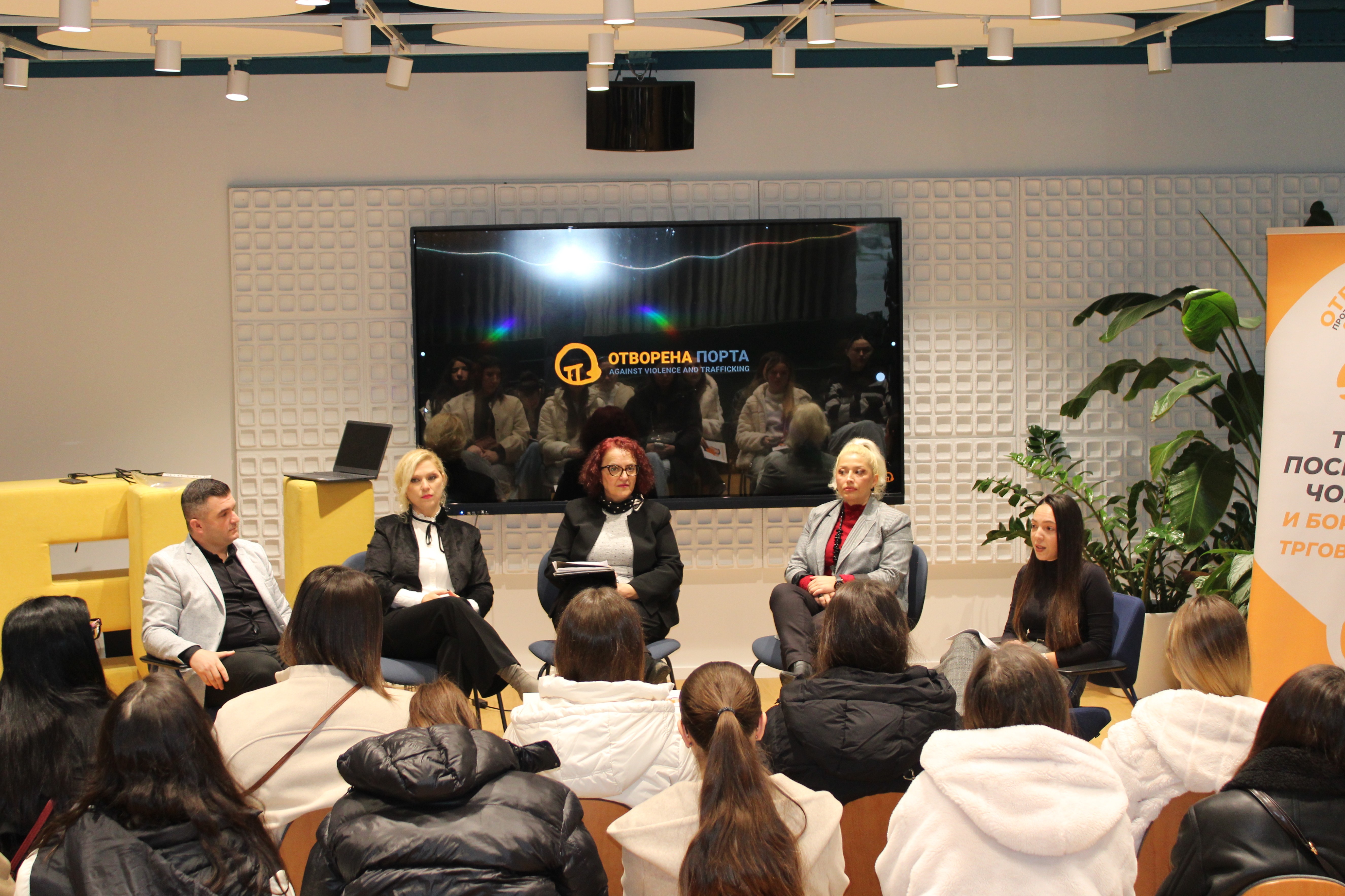
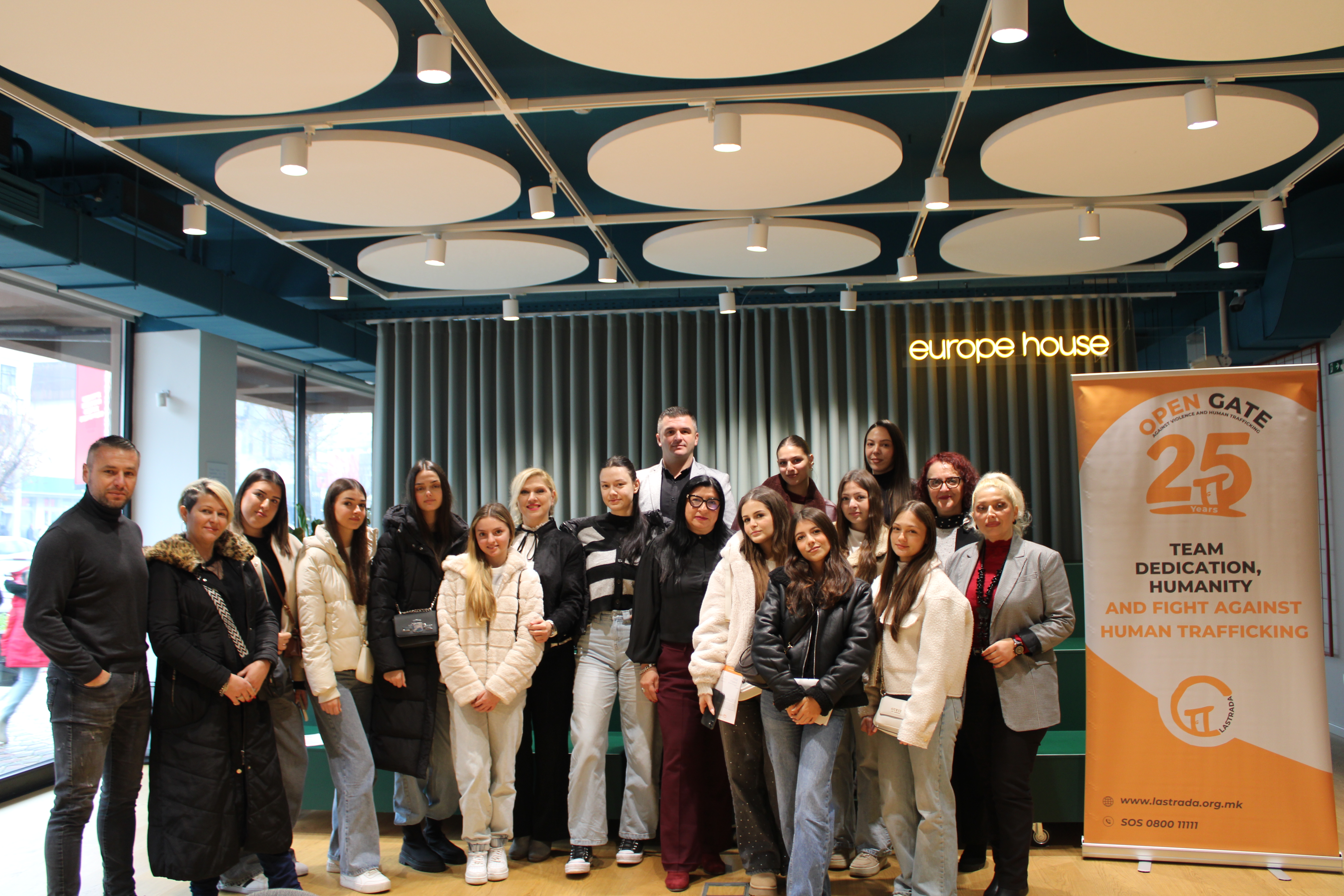
Svetlana Ristoska, a psychologist at the Tetovo Secondary Medical School, emphasized that the school has established clear reporting mechanisms through which students can register any problem, especially when it comes to violence. She explained that support is also provided to parents, who are a key factor in prevention.
Cvetanka Kamcheva Zlateva from Open Gate La Strada warned that although the digital space offers many opportunities, it also creates serious risks when it comes to manipulation, fraud, and abuse of trust. Therefore, young people must be informed and careful in online communication, recognize suspicious situations, and know that any concern should be reported immediately.
The three public events highlighted the necessity of close cooperation between institutions, civil society, schools, youth, and parents. Through the documentary film “The Way Out,” the exchange of experiences, and practical advice, participants gained tools for early recognition, prevention, and reporting of violence, human trafficking, and forced marriages. All events concluded with a message that strongly resonated with those present:
“No matter how many doors close, never stop looking for a way out. Help exists. Solutions exist. All it takes is the courage to seek the way out.”
The NGO Open Gate La Strada is implementing the campaign “I DO NOT Agree to a Forced Marriage” and the prevention programme under the operational grant “Hear the Voice of Trafficked Persons and Fight Organized Crime,” funded by the European Union.